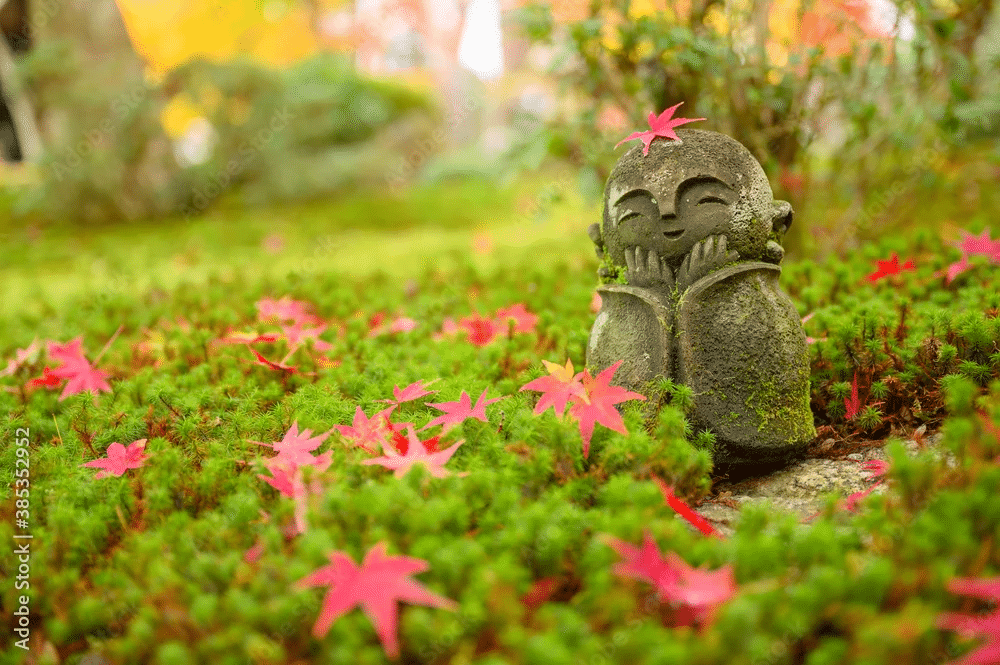
Garden meditation is a simple mindfulness practice that invites you to notice the sights, sounds, scents and textures of the natural world as a way of anchoring your attention in the present moment. You don’t need a beautiful garden, special equipment or a lengthy period of silence. A balcony, a park bench or even a single potted plant can offer a place to begin.
In a world where our attention is constantly pulled in different directions, spending a little time outdoors can offer a welcome opportunity to pause and notice what’s around us. The practice is straightforward: engage your senses, observe with curiosity, s and gently return your attention when your mind wanders.
What Is Garden Meditation?
At first glance, garden meditation might seem fairly obvious: sit in a garden and meditate. It can be that simple, but there’s a little more to it.
While some forms of seated meditation use the breath as its primary focus, garden meditation invites us to use our immediate surroundings in much the same way. We become observers, noticing the details of the natural world without feeling the need to interpret, judge or change what we experience.
It might be the delicate movement of a leaf in the breeze, the scent of damp earth after rainfall or the sound of a bird calling from somewhere in the trees. When our attention drifts toward yesterday’s worries or tomorrow’s responsibilities, we gently bring it back to the sights, sounds, and sensations around us.
This isn’t about achieving a perfectly quiet mind. Thoughts will come and go, and that’s entirely normal. The practice is simply to notice when your attention wanders and gently return it to your surroundings.
Why Practice Garden Meditation?
Spending time in nature and practicing mindfulness are two activities that can complement one another. Both offer opportunities to slow down, become more attentive and notice experiences that might otherwise pass us by.
There is also a growing body of research exploring the relationship between natural environments and mental wellbeing.
Attention Restoration Theory, developed by environmental psychologists Rachel and Stephen Kaplan, suggests that spending time in natural environments may help restore our capacity for directed attention. A 2025 systematic review and meta-analysis by Cameron N. Bell and colleagues, published in the Journal of Environmental Psychology, found that exposure to natural environments was associated with modest improvements in certain areas of cognitive performance, particularly working memory and attention control. However, the effects varied across studies.
A sense of awe is another potentially interesting aspect of spending time in nature. A 2023 longitudinal study by María Monroy, Dacher Keltner, and colleagues, published in Scientific Reports, explored the relationship between everyday experiences of awe, stress, and wellbeing. The researchers found that on days when participants experienced more awe, they also tended to report less stress and greater wellbeing.
Garden meditation gives us an opportunity to notice the details we might otherwise overlook. We begin to notice the extraordinary details hidden within ordinary surroundings.
A tiny insect navigating a blade of grass, the intricate structure of a flower or the changing patterns of sunlight through the trees can all invite a moment of curiosity and appreciation.
Sometimes, all it takes is looking a little closer.
How to Practice Garden Meditation
You don’t need to follow a complicated routine. Start with five or ten minutes and see what you notice.
1. Find your outdoor space
Choose somewhere you can spend a few relatively undisturbed minutes. This could be your own garden, a public park, an allotment, a balcony or a quiet spot beneath a tree. Find a comfortable place to sit or stand. You don’t need complete silence; the sounds around you can become part of your practice.
2. Take a moment to arrive
Before you begin, pause and take two or three comfortable breaths. Notice how your body feels and become aware of the ground beneath your feet or the support of your chair. Notice any tension in your shoulders, without needing to change it. There’s no need to control your breathing; simply notice its natural rhythm.
3. Open your awareness
Let your attention move outwards. Notice the space around you, the colors, shapes and movement. Rather than concentrating on one particular thing immediately, allow yourself to take in the wider environment.
4. Engage your senses
Bring one sense at a time into focus.
- Sight: Notice the different shades of green, the shape of leaves, the patterns on tree bark or the movement of clouds.
- Sound: Listen for birdsong, rustling leaves, insects or the gentle movement of branches in the wind.
- Smell: Notice the fragrance of flowers, the scent of pine or the earthy aroma of damp soil.
- Touch: If it’s comfortable, run your fingers over a leaf, touch the bark of a tree or feel the texture of a flower petal. Notice whether it is smooth, rough, cool or warm.
You don’t need to identify everything you encounter. Simply notice the experience.
5. Get a little closer
If you’re able, crouch down and look at the garden from a different perspective. What is happening at ground level? Perhaps there’s a beetle moving through the grass, an intricate spider’s web or a tiny plant growing between paving stones.
Take your time. There is an entire world of activity happening beneath our usual field of vision.
6. Allow your attention to settle
Choose something that has captured your interest and spend a little time observing it. Notice its details and any changes in movement, color or texture.
If your mind wanders, gently return your attention to what you’re observing. There’s no need to judge yourself or start again. Noticing that your attention has wandered is itself part of the practice.
7. Finish gently
Before ending your practice, pause for a moment and notice how you feel. Has anything changed in your awareness? Perhaps you’ve noticed something new, or perhaps you’ve simply spent a few minutes paying attention to the world around you.
There is no particular outcome you need to achieve. When you’re ready, bring your attention back to the rest of your day.
No Garden? Here’s How to Adapt
If you live in an apartment, try sitting on your balcony and observing the trees, sky or changing light. A nearby park bench can become your regular meditation spot, while a windowsill with a houseplant offers an opportunity to practice indoors.
You might even try mindful gardening. Watering plants, removing dead leaves or planting seeds can all become opportunities to notice the sensations, movements, and details of an everyday activity. If you prefer to move rather than sit, try incorporating some elements of garden meditation into a gentle outdoor walk. Notice the sensation of your feet touching the ground, the movement of your body and the sounds and textures around you. You can explore this further through Mindful’s walking meditation practice.
The important thing is not the size or beauty of your surroundings, but the quality of attention you bring to them.
A Little Time Outdoors
Perhaps we’ve become so accustomed to rushing through our days that we’ve forgotten how to simply pause and appreciate the world around us.
Garden meditation offers a gentle way to bring more awareness to the natural world around us Even a few minutes of mindful observation can be enough to change how you experience your surroundings.
The next time you step outside, take a moment. Feel the breeze against your skin, listen to the birds, and notice the small details that might otherwise go unseen.
You may discover that there’s far more to appreciate in an ordinary garden than you ever imagined.
Frequently Asked Questions
No. You can practice garden meditation in a public park, on a balcony, beside a window or with a single houseplant. Any opportunity to observe and engage with the natural world can become a mindfulness practice.
Five to ten minutes is a perfectly good starting point. You can gradually extend your practice if you enjoy it, but even a few mindful minutes outdoors can provide an opportunity to practice mindful awareness.
Garden meditation generally focuses on bringing awareness to the natural environment, whether sitting, standing or moving slowly. Walking meditation typically emphasizes awareness of movement and bodily sensations, although the two practices can easily be combined.
Spending time in nature and practicing mindfulness may support relaxation and emotional wellbeing. Garden meditation can offer a gentle way to step away from everyday demands and focus on the present, although it isn’t a substitute for professional support or treatment for anxiety.