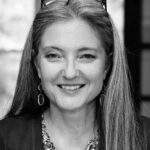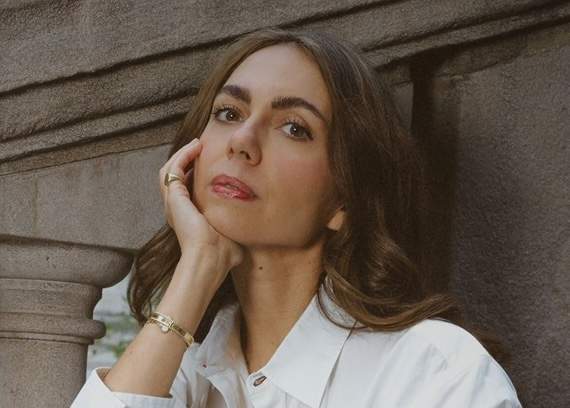
In 2013, Julie Bayer Salzman’s five-year-old son came home from kindergarten talking about his prefrontal cortex and his amygdala. She was so struck that she signed up for the same mindfulness course his school used to train its teachers. During one of her meditations, she pictured a short film. That film became Just Breathe, in which elementary school kids describe how mindfulness helps them work with anger. It was featured on Oprah’s Super Soul Sunday and has since been translated into six languages and shown in classrooms around the world.
Just Breathe grew into Mindful Shorts, an ongoing series of experiential documentaries that follow mindfulness across the life span. The five films so far cover anger in childhood, anxiety in middle school, depression in high school, addiction in midlife, and grief in the elder years. Made with her husband and creative partner, cinematographer Josh Salzman, through their company Wavecrest Films, the series is funded by donations and offered free to anyone who needs it.
Former Mindful editor Ava Whitney-Coulter first spoke with Salzman in 2024. After the recent release of Bayer’s latest film, Broken & Beautiful, Mindful Chief Editor Siri Myhrom caught up with her at her home in LA. They spoke about what it’s like to work on creative projects with her partner, what advertising taught her, how her practice shows up on set, and what she’s learned from the people at the heart of her newest films.
From Commercials to Conscious Storytelling
Siri Myhrom: You spent more than a decade producing commercial campaigns before directing your own work. What did advertising teach you about storytelling, and what did you have to unlearn?
Julie Bayer Salzman: Advertising taught me the importance of strong visuals in nonfiction filmmaking. Sometimes documentary filmmakers don’t place as much value on the visual style as they do on simply capturing the action unfolding in order to tell the best story, and of course that makes a lot of sense in some respect, because story is everything; however, film is a visual medium, and a documentary needs to be more than journalistic. It’s worth taking time to capture reality as beautifully as you can. That said, sometimes when documentaries look too slick, it can be a distraction. To me it’s important to find the balance.
We ask ourselves a simple question: What kind of value does it add to our shared human experience on this planet?
Commercials also taught me how to distill a story to its essence in a short amount of time. And yet, taken too far, that can be a detriment to any story. I had to unlearn to some extent the tendency to truncate a scene out of learned impatience, or playing into the audience’s short attention span. I don’t know if you’ve noticed, but there is not a lot of breathing space in a commercial!
This may seem corny or cliché, but when I started practicing mindfulness, I actually started to lean more into the idea of allowing a film to breathe. As I was learning to breathe more consciously myself, my filmmaking style started to evolve differently, more experientially—slowing the pace, and allowing more pauses between the thoughts or statements.
SM: Wavecrest’s mission is to make content with a positive social impact, and you’ve said you choose projects carefully so you don’t add to the noise. How do you decide whether a project is worth making?
JBS: We ask ourselves a simple question: What kind of value does it add to our shared human experience on this planet? Meaning: Does the project help us evolve collectively? Change the way we see the world? Inspire us to be better humans? Cultivate connection with nature or other humans? Laugh? If none of those things, then we’ll pass, thanks.
SM: You and Josh are married as well as creative partners. How do you divide the work, and how do you handle creative disagreements?
JBS: We’re incredibly lucky to have very complementary skill sets, while often sharing feelings as well as values. I’m big-picture; he’s details. I’ve got a million ideas and my antennae up at all times, taking in everything around me. I “see” the film conceptually, and have my producer skill set from years in commercials, therefore I tend to take the lead as director and producer; but he’s the cinematographer, and I trust him implicitly to capture my vision in the best possible way.
I can’t say we have creative disagreements, because honestly, we don’t. We respect each other’s strengths in a really beautiful way. It’s a unique creative synergy that I do not take for granted.
When it’s time to edit, I lay out the story, then pass it to him to sculpt the fine details that I usually have no patience for, like on which exact frame to place a cut. He enjoys tedium in a way I don’t.
I can’t say we have creative disagreements, because honestly, we don’t. We respect each other’s strengths in a really beautiful way. It’s a unique creative synergy that I do not take for granted.
Filmmaking as Practice
SM: When did mindfulness become part of your personal life, and when did you realize it could be the subject of your films?
JBS: Mindfulness became part of my life when my son started kindergarten in 2013. He came home at the age of five, talking about his prefrontal cortex and his amygdala, thanks to the social-emotional learning curriculum at his school, and I immediately enrolled in the course that the school’s principal used to train the teachers. While meditating one day, I envisioned the first film in the Mindful Shorts series, Just Breathe, and promptly made that film. Once I saw the success it was having, I realized that people were hungry for this type of learning, and the rest of the series evolved from there.
SM: You describe the Mindful Shorts as “experiential” films. What does that mean to you, and how do you design a film that viewers experience rather than just watch?
JBS: It means artfully crafting a film that results more in an embodied experience for the audience, rather than a passive viewing. We don’t conform to traditional standards in order to tell a story; we shape it in such a way that we hope the viewers walk away from the film feeling different energetically than they did at the start. That there is an actual impact on the nervous system—a sense of calm, of understanding—a certain kind of peace within.
When I’m interviewing people, I rarely consult my list of predetermined interview questions. Instead, I like to have a more intimate conversation, where the responses lead to more questions, rather than just asking questions in search of answers.
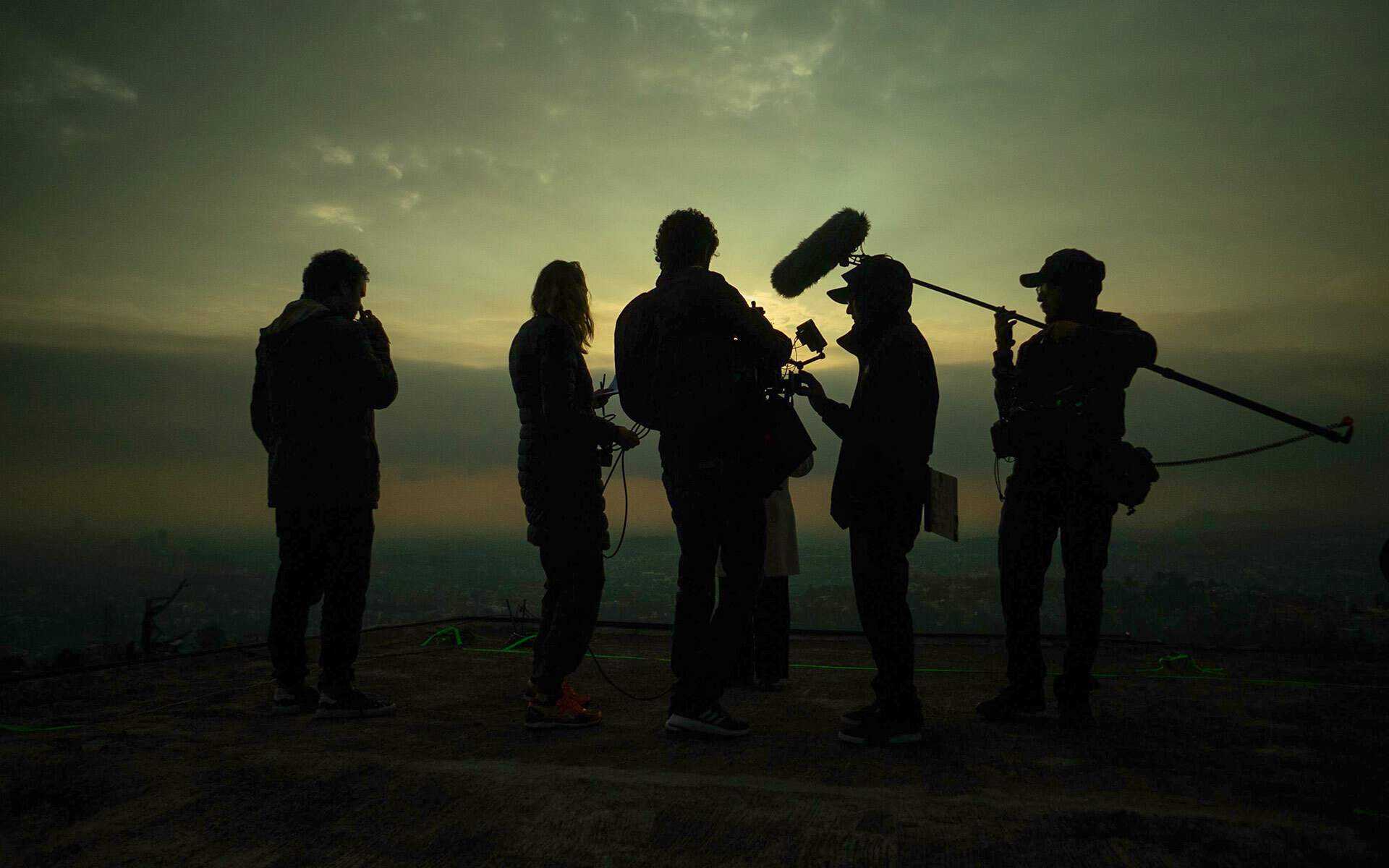
SM: Does your own mindfulness practice change how you behave on set, such as how you listen, when you stay quiet, or how you handle the unexpected?
JBS: Absolutely. The quality of presence, of attention, are much greater now. I’m far less in my head than I used to be, and it allows for more spontaneity and creative problem solving. I think my practice allows me to be much more fluid and present than I used to be.
When I’m interviewing people, I rarely consult my list of predetermined interview questions. Instead, I like to have a more intimate conversation, where the responses lead to more questions, rather than just asking questions in search of answers. The goal is not to cross items off a list; it’s to have an experience with the process itself.
SM: Mindfulness is an inner experience, and film is a visual medium. How do you show something that happens inside a person?
JBS: When you’re talking about something in one’s interior world, the exterior world must match it. Yes, film itself is a visual medium, but filmmaking as an art form is multisensory. In addition to having a distinct visual style, we place an enormous value on sound—ambient noise, music, everything—as well as on editorial pacing. It all must reflect the emotional tone behind what is being said, the changes and transformation that a character is going through when they are learning how to mindfully show up in the world.
We are not intimidating folks; I think we are warm and open by nature.
SM: Your films are unscripted and often feature people talking about very personal struggles. How do you create the kind of safety and trust that lets people be that open on camera?
JBS: I’m not sure I can answer this question, because it’s not something I consciously do. I think it’s mostly inherent to who both Josh and I are as human beings. We are not intimidating folks; I think we are warm and open by nature. I like to think that people just instinctively trust that we are safe to be vulnerable with, that we emanate an air of security.
SM: The series follows mindfulness from childhood through old age, moving from anger, to anxiety, depression, addiction, and grief. Was that structure planned from the beginning, or did it develop as you went?
JBS: Both. After the success of Just Breathe (on anger and elementary school kids), I recognized there was more work to be done. I awoke at 3 a.m., seeing the rest of the series in my head, so I grabbed my journal, sat on the couch, and wrote the progression of the films in a way that made sense to me.
What’s after elementary school? Middle school, when we start to name “stress.” I immediately thought about how people tend to project their anxieties on the world around them, and decided we had to project images on our subjects for that film (which eventually became Release). And then I started to think about high school, when we start to name “Depression,” and I began conjuring up what that film (Into Light) might look like. Next I started to think about the stage of middle life, when addiction tends to surface and become a problem for many. And on and on…it was a middle-of-the-night revelation of sorts.
The Newer Films: Addiction, Grief, and What Comes Next
The two most recent Mindful Shorts carry the series into adulthood. A Good Day (32 minutes) explores mindfulness and addiction in midlife, and won at the Real HeArt Film Festival. Broken & Beautiful (23 minutes) centers on Sandy Phillips, who turned to mindfulness after the death of her daughter, and took top honors at LA Shorts.
SM: A Good Day takes on addiction in midlife and is the longest Mindful Short so far. Why did this subject need more time than the earlier films?
JBS: Addiction is often the result of the unprocessed experiences that the earlier films delve into (anger, anxiety, depression, and trauma), and it’s something we don’t often deal with until we’re middle aged, so as I was editing the film, I felt the need to go deeper into it, covering ground I thought was necessary in order to be more comprehensive, which naturally resulted in a longer film. I guess it’s fair to say that the topic itself seemed to dictate the length of the film.
When you’re young, a loss (like a breakup with a first love, for example) seems like the end of the world, but older people know it’s just one of many, and that life is full of losses.
SM: Broken & Beautiful is about a particular kind of grief, the terrible loss of a child, and, more generally, grief in the elder years. What did you learn from older subjects about presence and loss that younger subjects couldn’t have taught you?
JBS: When you’re young, a loss (like a breakup with a first love, for example) seems like the end of the world, but older people know it’s just one of many, and that life is full of losses. The subject of Broken & Beautiful, Sandy Phillips, possesses a certain wisdom that only comes with age. That’s not to say that someone younger couldn’t speak to loss or grief, but she has lived through so much—and she started practicing mindfulness specifically to help herself process and navigate the death of her daughter.
That kind of perspective is rarely inherent in any one person’s being; it takes real time and intention to cultivate and embody it. Her particular quality of presence and attention is something that is earned, and learned, over years.
SM: Did making Broken & Beautiful affect how you deal with grief in your own life?
JBS: I think it impacted Josh more than me so far, as he had to deal with the unexpected death of his mother from a heart attack in 2012—a trauma that took him a long time to process. I think I can speak for him, though, when I say he no longer sees death as an ending to a person or the relationship with that person—something that was very difficult for him to accept earlier.
And then, sadly and tragically, the young kintsugi artist in Broken & Beautiful, Fumika Tanokashira, died suddenly last spring (2026), and I’m not sure I can quite put my finger on it but there was something profound about it all—the fact that she is the one showing us metaphorically, via kintsugi, how to put our lives back together after a terrible loss, and here she is the one now gone. It just leaves me speechless every time I think about it.
For some people, anecdotes are insufficient, and I understand why.
SM: Your next film is about trauma in young adults and will focus on the science behind mindfulness. Why add a scientific angle now, and how do you plan to balance research with personal stories?
JBS: I haven’t been awoken by a vision for that one yet! But I trust it will come…it always does. Sometimes it’s imagined ahead of time; sometimes it just emerges organically during the process of making a film. We shall see what the future holds.
But to answer the question of “why add a scientific angle now”: because skeptics still exist. For some people, anecdotes are insufficient, and I understand why. Proof must be in the data. Well, there’s plenty of data out there, and I intend to do something with it. I just have to find the right people who wish to collaborate on making that film. I know they’re out there.
Healing Ourselves, Healing the Planet
SM: The Mindful Shorts are funded through donations and offered for free. What does that model make possible, and what does it make harder?
JBS: What the model makes possible is grant money, because the series is produced as not-for-profit. We also retain full ownership and creative control of the content. There’s a certain satisfaction in knowing that anyone who needs the films can access them for free, even if it takes years to find them!
Yet the downside of that all is that we don’t have access to “investor” money. Investors want to know they’ll get their money back and more (spoiler alert: they won’t). It’s also harder to get third-party distribution when you go the not-for-profit model, so we self-distribute on YouTube, Vimeo, and other social media platforms (as well as of course have the films up on our website, Wavecrest Films). It’s certainly not the most lucrative way of doing things, but it feels right given the nature of what we’re trying to do.
Everything stems from awareness. Without real personal growth on a larger societal level, the Earth will continue to suffer.
SM: You’ve urged your audience to work on being better humans because the planet demands it. How do your environmental work and your mindfulness work connect for you?
JBS: Our first film, Time & Tide (2006), was on climate change in the South Pacific, and for years afterward, the environment was top on our list of topics we felt we, as filmmakers, must address. But then I started to think that there was no point trying to convince people to change their actions without teaching them first about self-awareness.
Everything stems from awareness. Without real personal growth on a larger societal level, the Earth will continue to suffer. We have to heal ourselves first if we wish to heal the planet. I do firmly believe though that once there’s a larger sea change of consciousness, planetary health will improve—one person at a time.