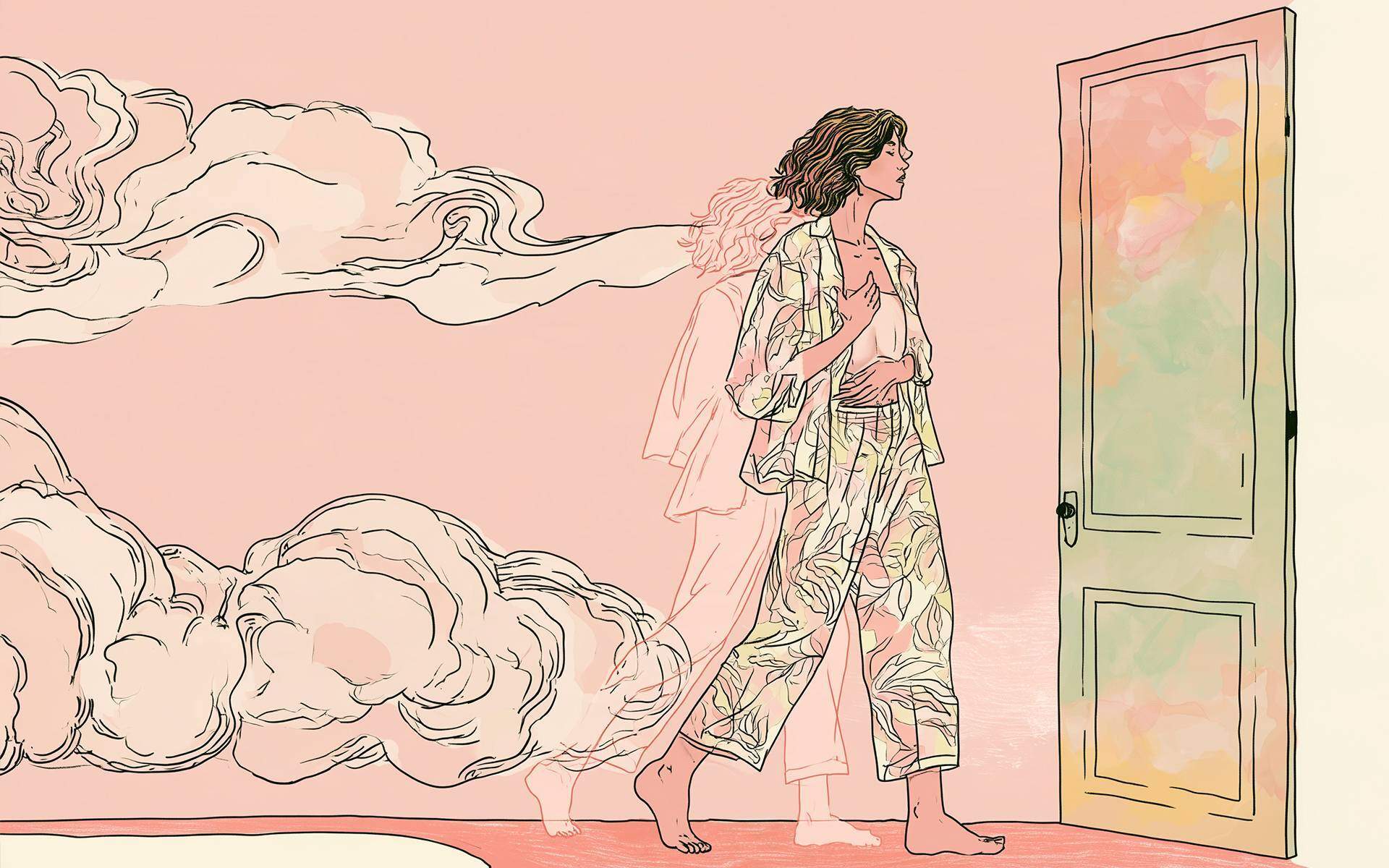
Change comes in a million different forms. It can be physical, emotional, relational, psychological—and often it’s all of those. We can move from a place, a job, or an identity.
Sitting in that in-between time isn’t always easy. Along with potential feelings of excitement or anticipation, we might also feel anxious, fearful, grieving, or resentful.
Our guest this week is Janice Martellucci, Executive Director of Peace in Schools. As millions of students get ready to head back to school in the Northern Hemisphere, she brings us a meditation to meet transitions and new places with courage and curiosity. Regardless of the type of transition you might be facing, this meditation is designed to help you:
- Notice the emotions that arise as you approach this change
- Stay present to what you’re experiencing with care, especially if you’re feeling fear or resistance
- Offer support to yourself and others
You can read more about the work of Peace in Schools in our in-depth interview with Janice here.
Janice Martellucci: Meditation for Transitions
Read and practice the guided meditation script below, pausing after each paragraph. Or listen to the audio practice.
- For this meditation, you can keep your eyes open if you want. You can close them. You can go back and forth between the two.
- If you notice that you’re starting to feel some overwhelm, that’s not bad or wrong. You can shift your focus to something outside of yourself. Perhaps open your eyes and find something in the room that’s neutral or pleasant to look at, or feel the texture of your sleeve with your fingers, or do some gentle rocking. The invitation is simply to give the practice a try to see what it’s like.
- This is a meditation for transitions. Whether you’re in any sort of life transition yourself or you’re here to just practice being with the collective during this transition, I welcome you to join me in meditation for the next 10 minutes.
- Begin by finding a comfortable position. You can do this meditation in any position you like. My invitation is for you to be relaxed but alert and be really intentional as you place your body. Notice if you’re already going into sort of a default mode of sitting. No judgment. It’s not bad or wrong. Just pause and give yourself the opportunity to really listen to your body in this moment and make any subtle shifts that will support you in just being comfortable and present.
- Let’s begin this meditation, taking all the time you need to take three of the deepest and longest breaths of your whole day so far. Once you’ve completed those three deep long breaths, allow the inhales and exhales to return to their natural rhythm. Let the ebb and flow of the breath be your guide.
- Take a moment to be curious and notice all the little details of the breath in and the breath out. Invite a beginner’s mind and give yourself permission to simply enjoy the breath.
- You might notice thoughts arise. Perhaps the mind is busy, or maybe there’s other sensations or even distractions pulling at your attention. There’s no need to push anything away, no need to get rid of any of that at all. Allow the breath to hold you and guide you as all of those things can be here, too.
- I invite you to notice that transition moment right after the inhalation and just before the exhalation. For the next few cycles of breath, notice what it’s like to really direct your attention to this moment of transition, allowing the breath to go at its natural pace, allowing thoughts, sensations, emotions to come to go or just let them be as you continue to breathe.
- Now we can layer on a simple counting practice. So you can still be focusing on the breath, the transition between the inhale and the exhale, and right before or right as you start inhaling after that transition moment, I’m just gonna invite you to count the breath. So you’ll count one, breathing in and breathing out, noticing that moment of transition. And then as you’re inhaling in, you’re counting two.
- The practice is to do that all the way to number 10 for 10 breaths, and when you get to the number 10, just begin again at one. We’re using the breath and the counting as an anchor to support us, anchoring the attention right here, right now.
- Now, what’s likely going to happen is at some point you might notice you’ve forgotten to count. Or you’ve counted far past 10, or maybe you notice you’ve gotten lost in thought. An essential part of this practice is non-judgment and compassion, kindness and gentleness. So if at any moment you notice the mind has wandered, just notice where it’s gone with kindness, and then gently invite yourself to begin again. It’s actually in this moment of transition back to the practice of focusing on the breath, back to the practice of counting, that we’re building new neural pathways in the brain. So rather than being critical of ourselves for having a wandering mind, what if we actually celebrated that moment to choose to return, to remember that we can direct our attention where we want it to be.
- As we think about the larger transitions into fall and back to school and whatever else may be arising in the content of your life, what an empowering gift to know that whenever I feel I’ve gone astray, I can pause and with compassion invite myself back to this moment, to the breath, to the refuge of the present moment.
- Bring attention to that space in between the inhale and exhale, and practice using counting as an anchor. Notice where the attention is in this moment, and if it’s anywhere other than counting the breath, noticing the space between, just note where it’s gone without judgment, and invite yourself to start over with kindness.
- In the Pali language, the root word of mindfulness is remembrance. So as we think about this practice, we can think about it in two ways. One, it’s the opportunity to remember to come back to the present moment. It’s a skill we can build to: we can direct our attention to where we want it to be. In addition to that, this practice is a beautiful opportunity to get in touch with and remember who we authentically are, to remember that we are inherently whole, unbreakable, beloved. It’s this remembrance, this contact with really knowing and loving ourselves, that can see us through any transition in life, no matter how big or small.
- To close out our practice today, I invite you to place one hand over your heart and just another below on the solar plexus where the ribs come together. In our high school classrooms at Peace in Schools, we call this the embrace of compassion. So know that thousands of teenagers and educators have also practiced in this way before you and will continue to do so this school year.
- Take a moment here to offer yourself any words of kindness, any unconditionally loving reassurances that arise. It could come in words or phrases, or it could just be a feeling. Take a moment to honor all that we hold individually and together. It could be as simple as I see you, I’m here with you through this transition. There’s no way to do this wrong. Just notice what’s arising and make space to be with what’s here right now with kindness, allowing all of it.
- We will close out our meditation the same way that we started. Go ahead and take all the time you need to take three of some of the deepest, longest, most nourishing breaths of your whole day, filling up the lungs on the inhalation, allowing for that natural transition to the exhalation, and breathing out fully. Take this moment to rest in your inherent interconnection to life, to our planet, to all beings
- At the end of your final breath out, you can release the hands, open the eyes or raise the gaze, and begin to transition into the rest of your day. Thank you for your practice today.