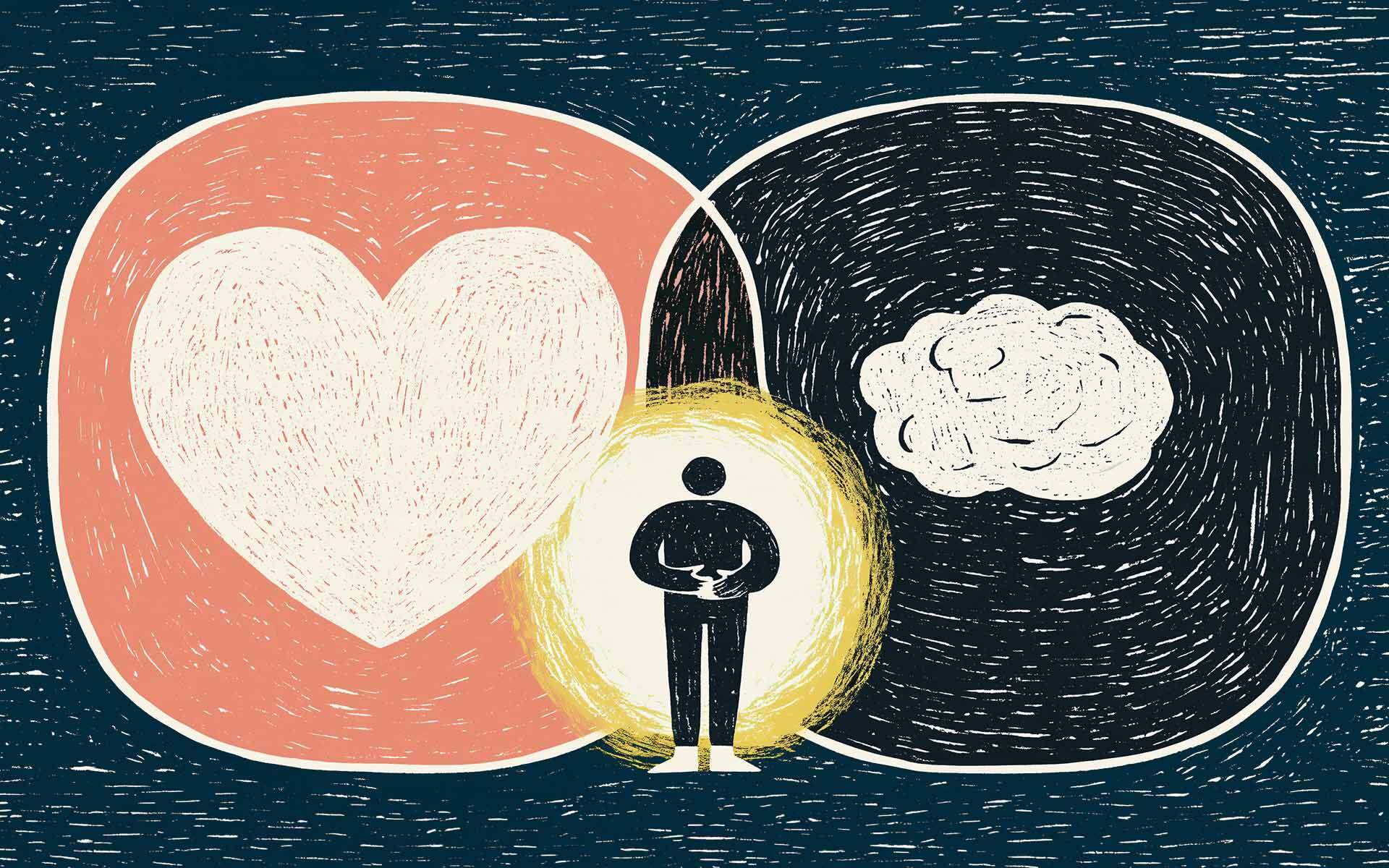
You may recognize that quiet, inner pull that comes when you least expect it, perhaps as a sense of unease that makes you change plans at the last minute, only to find out later that you narrowly missed something dangerous. Or you may feel drawn toward certain people or places without quite knowing why, only to discover later that those connections opened doors to new opportunities.
Sometimes these signals feel obvious, like a burst of excitement in your chest or butterflies in your stomach. Other times, they show up as a quiet sense of simply knowing what to do. Whether they’re instantaneous or linger over time, they may be signs of your intuition in action.
If you don’t feel very in tune with your intuition, there’s good news: Each day, you have the opportunity to turn inward, notice your thoughts, emotions, and bodily sensations, and listen to what your inner voice might be telling you. Over time, this practice of self-awareness can become a habit that helps you live more authentically and fully.
How Intuition Operates in the Brain
Intuition stems from our nervous system, emotions, and unconscious processes working together to help us make sense of the world. Our body’s sensory networks are always at work gathering information from our environment, finding patterns from past experiences, and directing our present-day thinking and decisions.
Through our senses, our nervous system gathers information and sends signals to the brain. Regions like the amygdala help us rapidly detect potential threats, while the prefrontal cortex, which handles complex reasoning and decision-making, helps us interpret information more deliberately.
That first, quick assessment happens remarkably fast. For instance, research suggests that our brains can begin detecting and interpreting subtle facial expressions in a fraction of a second.
Intuition vs Instinct: What’s the Difference?
Intuition differs from instinct, which involves automatic responses that can help protect us from danger, including reactions like fight, flight, or freeze. While instinctive responses are largely automatic, intuition draws on our past life experiences and learned patterns to help us make sense of what we encounter in daily life. Although both can feel immediate, intuitive judgments are not always accurate and may also reflect learned biases or assumptions.
How the Mind Uses Past Patterns to Guide Us
Intuition can feel like a gut feeling that is hard to put into words. This is because our brain is able to look for patterns between old memories and present-day situations, using useful takeaways from the past to guide us now. This process can also include implicit, unconscious memories that we may have thought we’d forgotten.
How the Gut Impacts Intuition
If the brain is key to processing intuition, then why do we often associate it with a “gut feeling?” Part of the explanation lies in the gut-brain axis, the complex communication network connecting our brain and digestive system. The walls of our digestive tract contain a network of millions of neurons that make up the enteric nervous system, or ENS.
The ENS is often called our “second brain” because it can regulate many digestive functions independently of the central nervous system. Through the gut-brain axis, digestive processes can also interact with systems involved in mood and emotion. Research has linked gastrointestinal inflammation and changes in gut function with symptoms of depression and anxiety. Most of the body’s serotonin is also produced in the digestive tract, although it doesn’t directly enter the brain. Researchers are still exploring the complex relationship between gut health and mental well-being.
This gut-brain connection helps explain why we might experience a sinking feeling in the pit of our stomach when something doesn’t feel quite right.
Emotional Intelligence and Our Wise Mind
All day long, our minds are hard at work integrating rational thought with emotional intelligence (EQ). EQ helps us to become aware of and understand both our emotions and those of others. It’s a type of intelligence we can develop through emotion regulation practice, expanding our emotional vocabulary, and approaching feelings as clues to something instead of an end product.
EQ can help us manage stress, notice our assumptions, and respond more thoughtfully to difficult emotions, such as those that arise after a tense conversation. It helps us pause and remain mindful during challenging moments, and also as we choose our next steps. Developing emotional intelligence may also support our ability to recover from stressful experiences.
In Dialectical Behavior Therapy (DBT), combining emotional awareness with rational thinking is known as accessing our wise mind. To be in our wise mind allows us to stay aware of feelings like fear and anger without judging them, or acting on them impulsively. Instead of automatically acting on our first reaction, we can ground ourselves while tackling emotionally painful situations.
Authenticity, Wisdom, and Internal Congruence
Wisdom and living authentically are closely connected. As the ancient Greek maxim “Know thyself” suggests, self-knowledge is an important part of wisdom. By understanding our deeper motivations, core needs, and cherished values, we can make more intentional decisions that reflect who we are and what matters most to us.
Family systems therapist Virginia Satir connected personal authenticity to congruence between our internal reality and outward actions. This alignment can support our emotional well-being and help us act in ways that reflect our values. Incongruence, however, may leave us with a nagging sense that things are not quite right. Noticing incongruence in real time can help us to adjust and choose to do what feels more authentic to us and who we wish to be.
Trauma Can Disconnect Us from Intuition
Sometimes, traumatic experiences can make it harder to recognize or trust our intuition, particularly when painful memories leave us feeling fearful or unsafe. Common trauma responses, such as hypervigilance to danger, will tax our nervous system, making it difficult to access the balanced perspective of our wise mind.
Trauma-based responses, such as anticipating negative outcomes in uncertain situations, can contribute to doubting our intuition and avoiding risks. Similarly, depression can affect our self-esteem and confidence, informing how we interpret new situations as more negative. Holding hope for a better future might require noticing the positive patterns that run through our lives, and accessing support to process what we have gone through.
How Social Pressures Can Create Self-Doubt
Social pressure can also make us second-guess ourselves. For example, growing up with family expectations to defer to others and put their needs first might make us believe that prioritizing our own needs is selfish. Similarly, other people’s ideas of what success looks like can make us overlook our own aspirations, such as the desire to pursue a different career path.
We may become more aware of these pressures as we get older. Hospice nurse Bronnie Ware identified five common regrets her patients shared toward the end of their lives:
- Following outer expectations instead of pursuing their dreams
- Prioritizing work over time with family and loved ones
- Not having the courage to express their feelings
- Not dedicating enough time to deepening their friendships
- Not letting themselves be happier
These reflections offer a reminder of the importance of making choices that align with what matters most to us.
Rebuilding Our Intuition
Getting to know ourselves—our preferences, desires, and even dreams—requires making time to turn inward. A helpful practice for building the habit of self-reflecting is time in peaceful solitude. Time alone may encourage mind-wandering and daydreaming, activities associated with the brain’s default mode network, which plays a role in reflection, imagination, and our sense of self.
Quiet may even have benefits for brain health. In one study, mice exposed to periods of silence developed more immature neurons in the hippocampus, a region involved in memory and learning, though similar effects haven’t been established in humans. And while quiet moments may sometimes feel boring, they can also create space for reflection, creativity and new ideas.
Other practices, such as spending time in nature, journaling, meditation, engaging in spiritual reflection, and limiting technology, may also strengthen our intuition and self-awareness, as we remember who we are and what we care about the most.
Clarifying Core Values
Clarity about our personal values is another entryway to deepening intuition. In Acceptance and Commitment Therapy (ACT), values help guide meaningful action and provide direction as we navigate life’s uncertainties. They can guide our daily actions much like an inner compass would—keeping us focused on long-term goals.
Knowing our values helps us remember how we want to show up during challenging times and stay grounded when stress feels overwhelming. Values can take many forms, from nurturing relationships, to cultivating personal qualities, or finding greater joy and fulfillment in everyday life. Naming your values and writing them down may help you distinguish between choices rooted in what matters to you and those driven primarily by fear, particularly when clarity feels hard to find.
Seeking Support from Therapy
Psychotherapy can provide an intentional, supportive space where you can go inward. Therapy can also help us explore how past experiences shape our reactions, making it easier to distinguish familiar emotional patterns from what we’re noticing in the present. There are many evidence-based therapies that can help support trauma recovery, managing symptoms of anxiety and depression, and building a stronger sense of self:
- Trauma-focused therapies like Somatic Experiencing and EMDR help regulate the nervous system through trauma processing, so body signals can become guidance rather than simply alarms
- Creative arts therapies offer imaginative ways to explore emotions and experiences through art, poetry, dance, drama, film, and other media
- Relationship therapies like Emotionally Focused Therapy can help people explore unmet needs and communicate them more authentically with loved ones
- Cognitive Behavioral Therapy (CBT) helps people notice limiting beliefs and fear-based predictions to develop more balanced ways of thinking
- Therapies that incorporate mindfulness, like Dialectical Behavior Therapy, can help people pause, name emotions without judgment, and choose next steps wisely
Learning to Trust Ourselves
Thinking back to the gut feelings we began with—the caution that turned out to be right, and the inner pull that led toward new possibilities—we can see how these experiences may reflect more than coincidence. Instead, they’re signs that our nervous system, emotional intellect, mental pattern-finding, and lived experience are all working together to shape our perceptions and decisions.
Learning to trust our intuition’s guidance can take practice, particularly if difficult experiences have caused us to doubt it. But each time we pause, turn inward, and honor what we notice inside, we can build a more honest and trusting relationship with ourselves. Over time, what once felt like a faint signal may become a steady, recognizable voice that helps us move forward with greater confidence. Our capacity for intuitive wisdom is always there, and the invitation is simply to listen.