
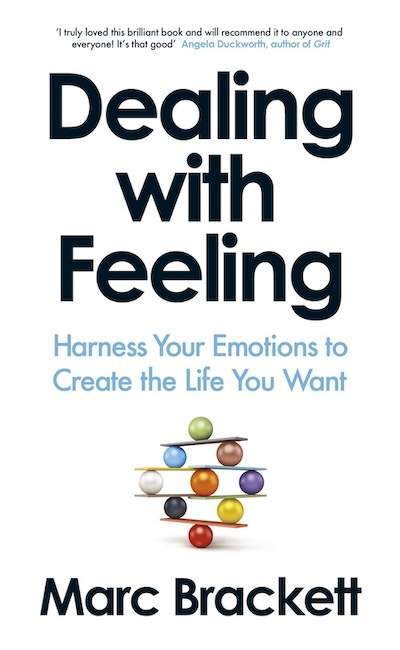
Dealing with Feeling: Use Your Emotions to Create the Life You Want
Marc Brackett, Celadon Books
In his first book, Permission to Feel, Marc Brackett—who teaches at the Yale Child Study Center and is founding director of the Yale Center for Emotional Intelligence—gave readers tools for building emotional intelligence. In Dealing with Feeling, he dives into the subject of emotion regulation: what it actually is (and isn’t), how the ability to regulate emotion steers the course of our life, and how anyone can learn this skill.
In his first book, Permission to Feel, Marc Brackett—who teaches at the Yale Child Study Center and is founding director of the Yale Center for Emotional Intelligence—gave readers tools for building emotional intelligence. In Dealing with Feeling, he dives into the subject of emotion regulation: what it actually is (and isn’t), how the ability to regulate emotion steers the course of our life, and how anyone can learn this skill.
When we hear emotion “regulation,” Brackett writes, we tend to think “smothering” or “controlling.” The reality is more nuanced. He cites leading researcher James Gross’s definition: “a process by which individuals modify their emotional experiences, expressions, and physiology and the situations eliciting such emotions in order to produce appropriate responses to the ever-changing demands posed by the environment.” In other words, there’s always a reason for feeling as we do—and what matters is how we choose to work with our emotions, to shape our lives and others’.
That’s not to say it will be easy. “There’s no magic involved in dealing with feelings. No one was born knowing how to regulate their emotions,” Brackett writes. As children we absorbed ways of perceiving and reacting to them, whether they served us or not. But if these (often unconscious) emotional habits don’t support our happiness, health, or success, we can develop more beneficial ones. That’s exactly what we get in this book: an active, nonjudgmental, and empowering approach.
Brackett guides us through a framework of seven strategies that include shifting our beliefs about emotions, quieting mind and body through the breath—a core aspect of mindfulness practice—and, eventually, integrating emotion regulation skills into who we are. Brackett also spends time on co-regulation, healthy attachment, the value in all of our emotions (not only the “positive” ones), and even loving-kindness practice. A lively narrative voice, and plenty of real-world scenarios—relating to work, parenting, relationships, and more—to illustrate concepts, complemented by accessible neuroscientific explanations, make this book of benefit to anyone who wants to not just deal, but make friends, with their emotions. – AT
Wise Effort: Align Your Strengths, Let Go of Struggle, and Move Toward What Truly Matters
Diana Hill, PhD – Sounds True
Wise Effort is psychologist Diana Hill’s fourth book, a compassionate and empowering invitation to redirect your energy toward a life of clarity and purpose. Drawing from mindfulness, neuroscience, and modern psychology, Hill guides readers who feel trapped in cycles of overwork, distraction, or self-doubt to reconnect with their deepest values and strengths.
To describe the cycle of striving, Hill offers a powerful image: “Life often feels like [we’re] a bird trapped inside a house—flying harder and faster, only to hit the same invisible walls.” As she notes, “We think if we just fly harder, go faster, or push ourselves more, we’ll get out. But effort without clarity leaves us trapped, burned out, and wondering how we got here.” Wise Effort offers a different path: aligning with what matters most so our actions flow with greater ease and vitality.
Central to her approach is the recognition that our greatest strengths, our “genius energy,” can also become our greatest struggles when misdirected or overused. Instead of abandoning those parts of ourselves, Hill invites us to meet them with curiosity and care. “Don’t stop being who you are,” she writes. “Your quirks, sensitivities, and strengths have helped you survive. The world needs your genius.”
Through reflective prompts, practical exercises, and engaging stories, Hill lays out her Wise Effort method: Get Curious, Open Up, and Focus Your Energy. Her simple yet profound practices help readers channel their natural gifts toward meaningful change without burning out or losing themselves.
With Hill’s characteristic warmth and insight, Wise Effort provides a roadmap for moving beyond struggle, embracing your authentic capacities, and “flying in the right direction” toward a life of greater connection, vitality, and purpose. – AF
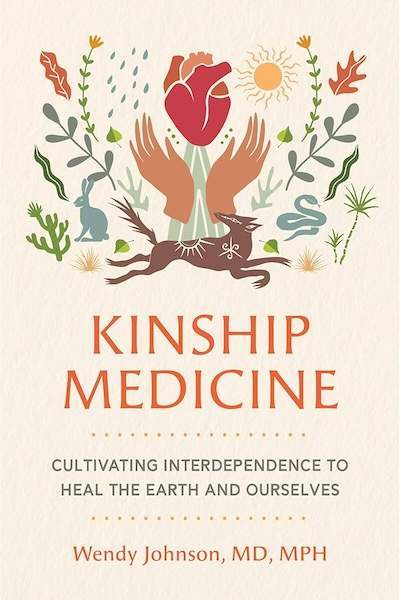
Kinship Medicine: Cultivating Interdependence to Heal the Earth and Ourselves
Wendy Johnson, MD, MPH – North Atlantic Books
“We can choose to be in kinship with living things, sharing our space and our moment in time.”
In Kinship Medicine, Wendy Johnson brings her experience as a medical doctor, a traveler, and community member to explore what’s possible when we live in intentional relationship with others—not only other people, but with the Earth, and every living being. It’s also a tally of what we’ve lost by forgetting our interconnection, and a warning about what’s at risk.
The book offers up a full and thorough picture of the interconnected issues plaguing our world today and takes them on one by one, with compassion and a deep curiosity that brings the reader around the world and back in time. Johnson weaves firsthand accounts from the clinic, historical thought, and diverse ways of living with scientific evidence and rich conversations. Page by page, she reveals that there’s an abundance of inspiration to guide us forward, if we’re open to widening our search for health and happiness beyond of the multi-billion dollar wellness industry, and if we’re open to change.
“When we see our neighbors as loved ones and family, the struggle for survival becomes both grander and more personal. We fight harder for what we love,” she writes. An interconnected mess of problems needs intersectional answers: “We need a million solutions rising up from a million collective imaginations and a million centers of resilience and experimentation, all of them taking on the big questions.”
Johnson tells us we’re beyond due for a collective paradigm shift, “from human-centric, to life-centric,” and the change begins with us, wherever we are, right now. In Kinship Medicine, she gives us the context and next steps we need to get started. – AWC
The Mindful Path to Intimacy: Cultivating a Deeper Connection with Your Partner
James V. Cordova – Guilford Press
In mindfulness practice, paying attention is more than just a thing we do. It’s actually a way of offering love—because when we are willing to be with someone with our whole selves, we’re opening doorways to a quality and depth of connection that isn’t there when we’re distracted and checked out. In many long-term relationships, what’s missing isn’t dramatic. It’s just this quiet, intentional form of attention. In The Mindful Path to Intimacy, James Cordova, a leader in relationship research and couple therapy, taps into our deepest and most vulnerable longings: “We yearn to know that we have always been a part of something grander and more beautiful than we can imagine.” His work demonstrates how mindful awareness can serve all areas of partnership, from listening and emotional regulation to sexual intimacy and conflict resolution. This is a practical guide—and a wise support to help partners prepare compassionately for the inevitable challenges of aging, illness, and dying. – SM
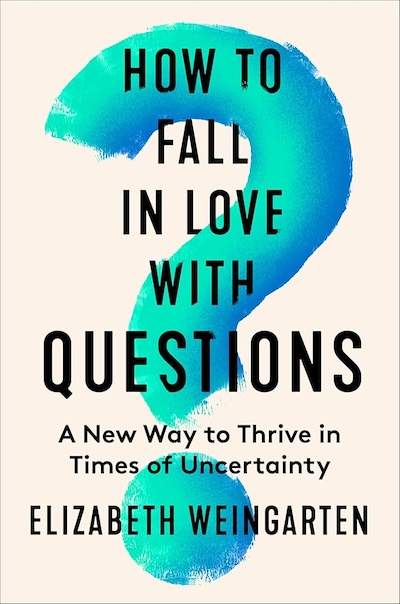
How to Fall in Love with Questions: A New Way to Thrive in Times of Uncertainty
Elizabeth Weingarten – HarperOne
“Maybe the phrase ‘embrace uncertainty’ makes you, too, cringe,” writes Elizabeth Weingarten in the introduction to How to Fall in Love with Questions—suggesting an interest in going beyond the simplistic, positive-vibes-only attitude to life struggles, which remains pervasive in the wellness world. Uncertainty can be terrifying, especially when it feels like we’re steeped in it. Yet Weingarten, a behavioral scientist and journalist, asserts that pursuing the comfort of certainty is a waste of time, energy, and money, because life never runs out of questions. She draws from the life and writings of early-20th-century Austrian poet Rainer Maria Rilke, plus many modern-day experts, to find her own way to “love the questions” and help readers love theirs. One way is by cultivating healthy curiosity—shown in research by Dr. Judson Brewer and others to effectively reduce anxiety—through creating a Questions Map. She then explores psychedelic therapy, journaling techniques, distancing tools (like reframing a question), and more. It all adds up to an insightful and empowering narrative. – AT
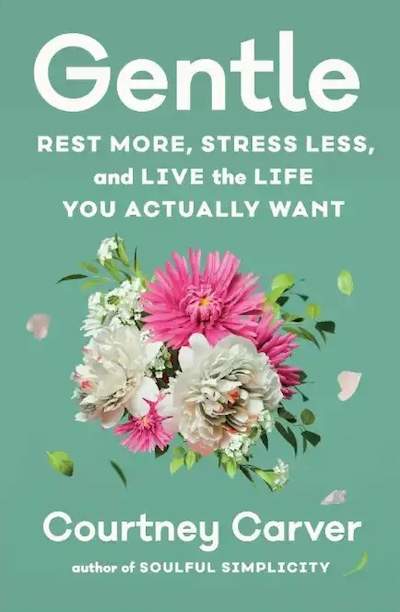
Gentle: Choosing Calm, Creating Space, and Cultivating the Life You Long For
Courtney Carver – Balance
If you’ve ever wondered how to step away from hustle culture, Gentle can help you find your way to embracing ease. Courtney Carver, who has lived with multiple sclerosis for more than a decade, offers a compassionate and practical framework for slowing down and reclaiming energy, clarity, and joy.
Carver invites us to release the old belief that rest must be earned, offering a new question to carry forward: “Have I rested enough to do my most loving, meaningful work?” She shows how gentle change without self-criticism or force can open space for true transformation.
Organized into three guiding seasons—Rest, Less, and Rise—Gentle becomes less a manual and more a permission slip. It invites readers to let go of overdoing, reconnect with what matters most, and find “strength in your softness, and fierceness in your flexibility.” On every page, Carver reassures us that gentleness is not giving up, it’s the way through. – AF
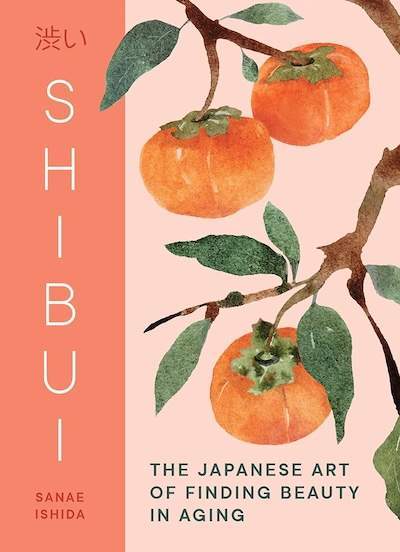
Shibui: The Japanese Art of Finding Beauty in Aging
Sanae Ishida – Penguin
In the West, especially for women, aging is often regarded as a curse. There’s a multi-billion-dollar industry specifically designed to stave off the inevitability of old age with elaborate routines, products, and surgical interventions. What if we viewed growing older as a place to meet the fullness of wisdom, grace, and loveliness? In Shibui, Sanae Ishida draws on Eastern traditions that honor the journey of aging. With exercises that range from rethinking our wrinkles and examining our envy to inviting contentment and meeting our mortality, this book is intentionally designed to nurture a sense of genuine appreciation for the later chapters of life. – SM
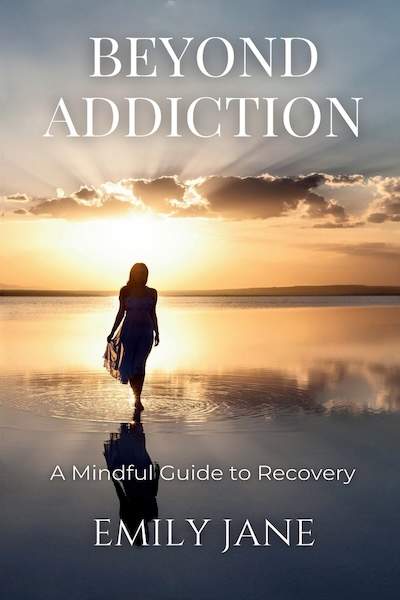
Beyond Addiction: A Mindful Guide to Recovery
Emily Jane
Emily Jane writes not only with the expertise of someone who understands the mechanics of trauma, addiction, and healing, but also with the intensity and compassion of someone who intimately knows this story from the inside. In Beyond Addiction, Jane draws on multiple threads, weaving together personal narrative, trauma-informed research, guided practices, and an exploration of the rich roots of mindfulness. As she notes, addiction “attempted to take my sanity and sense of self, my mental and physical health, my ability to work, socialise and maintain relationships”—but she also deftly demonstrates how mindful living is both uniquely equipped to meet us in our darkest moments and to guide us gently back to our true, radiant, recovered selves. – SM
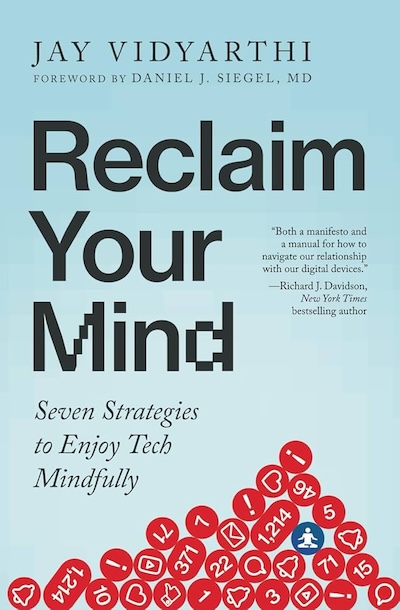
Reclaim Your Mind: Seven Strategies to Enjoy Tech Mindfully
Jay Vidyarthi – Still Ape Press
A mindfulness teacher and tech designer, Jay Vidyarthi knows that savoring digital technology and feeling trapped by it often go hand in hand. Reclaim Your Mind is the fresh, thoughtful, relatable guide we need to become aware of pitfalls, train the mind, and thrive with, not in spite of, tech. Part One explores Vidyarthi’s “attention activist” approach; in Part Two he introduces strategies and practices for engaging with TV, smartphones, video games, and other tech with both discernment and joy: “In the same way meditators learn to befriend their thoughts, we can work gently and gradually toward finding a middle way with technology.”
Practice Roundup
3 Meditations for Deepening Trust
Becoming familiar with a difficult emotion means getting interested and curious about the experience, like you might do when visiting a new city. Take it slow, uncovering new “territory” a bit at a time. In this meditation, build inner strength and release judgment by learning that you can sit with uncomfortable feelings, and that they will eventually pass.
In this world of constant disruption and noise, offering your undivided and unconditional attention is a precious gift. Being present in this way builds trust, while also strengthening the connection you have with others. This practice reminds you to give the gift of presence, helping you to remember and engage meaningfully with both friends and colleagues alike.
There is a direct link to your exhale and your stressed-out thoughts. A sigh or a longer exhale signals to the body’s vagus nerve that we’re safe and that it’s OK to relax now. This simple breathing practice guides you to extend the length of your exhale, using a basic 1:2 ratio breath that will help with relaxation and sleep.