

1. Is there a wrong way to meditate? A right way to meditate?
People think they’re messing up when they’re meditating because of how busy the mind is. We get caught in the trap of thinking that meditation is supposed to be giving us a whole new magical device, like they sell on late night television: “Get NewBrain. It’s does all the thinking for you, except better!” But, nope, it’s just the good ol’ human nervous system and brain. So, when we find that meditation acquaints us further with our same old brain and its same old ways, we’re convinced we are not doing the right way to meditate. We want that shiny new thing.
Getting lost in thought, noticing it, and returning to your chosen meditation object— breath, sound, body sensation, or something else—is how it’s done. That’s about it. If you’re doing that, you’re doing it right!
Yes. There are guidelines/instructions. Much like learning anything new. There are numerous meditation techniques. Each will have their own nuances and guidelines. What all mindfulness techniques share, though, is use of an anchor or support for the wandering mind. When you wake up from the trance of thought, you have choice. You can continue to nurse the current storyline (Days of Our Lives, The Edge of Night, The Young and the Restless, The Old and the Restless, whatever daytime melodrama you choose), or you can let it move on, and begin again. The instruction is to begin again, and again, and again. Watch the mind’s tendency to try to milk a thought for all it’s worth, to cling to it for dear life. Especially if it is enjoyable! If it’s not enjoyable, maybe you’ll be watching a mental gymnastics match, as the mind twists and turns and tries to shapeshift. When the drama has played out—20 seconds or 20 minutes later—the beauty is you can go right back to your breath (or whatever anchor you’re using), and you’ve done nothing wrong.
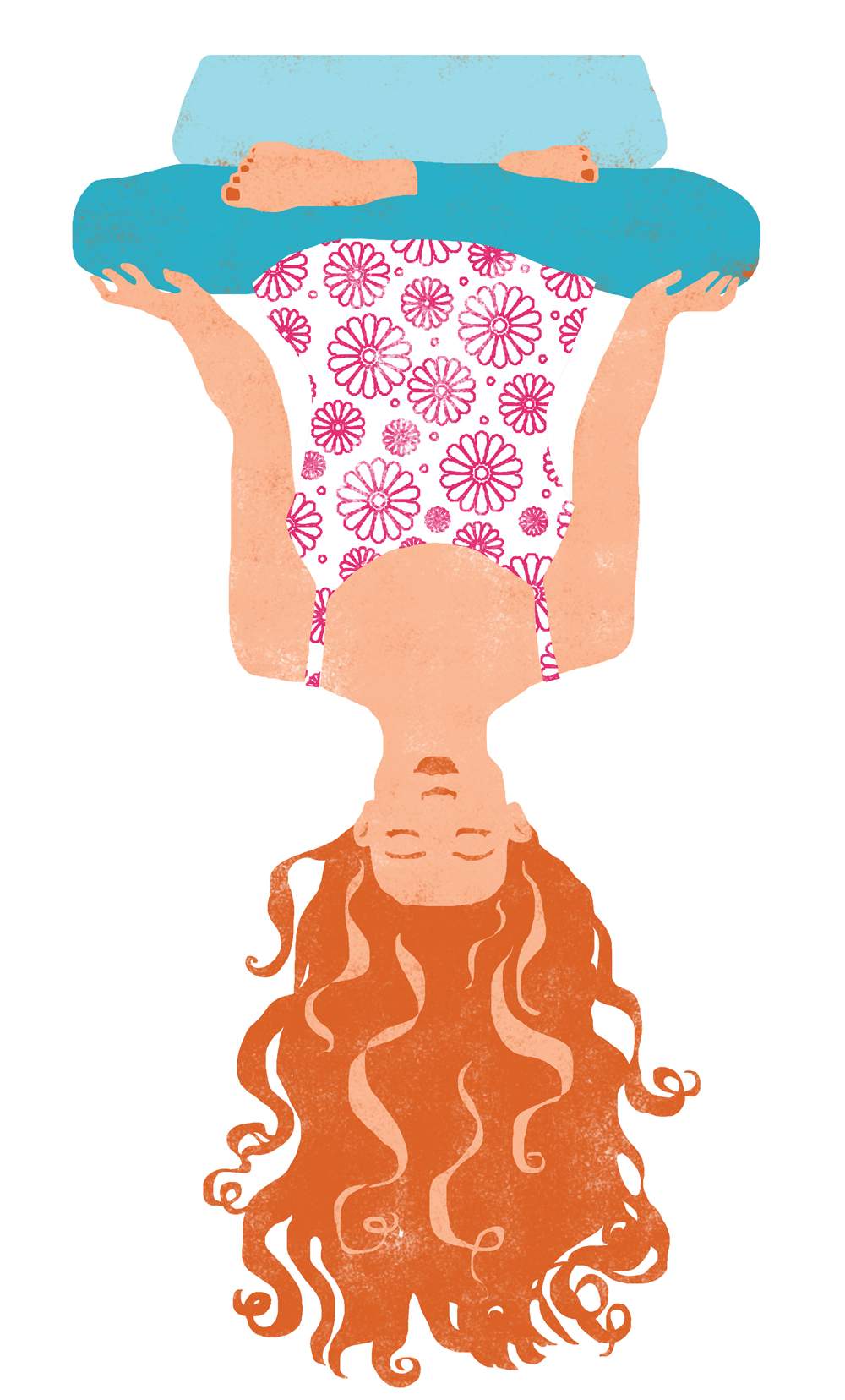
2. How will I ever find the time to do this? And how much time is the right amount?
The long-distance French swimmer Ben LeCompte once described how he managed to swim across the entire Atlantic ocean: “I never jump into the water thinking about the entire ocean, I just cut it into small pieces. When I am in the middle of the ocean, I think about being in a pool and the pool moves with me.”
When you’re getting into meditation, it’s easy to get psyched out if you begin by imagining that an ocean lies between you and the goal you’ve set for yourself: reduced stress, better relationships, more focus, world peace. Put your goals in a mental safety deposit box and forget about them, along with the ocean of breaths that separate you from them. Instead, commit to concentrating on just the breath in front of you.
Decide how big the “pool” of breaths you want to move within should be. This will change over time, and be different for everyone. It may start as five minutes a day, three times a week. Or ten minutes a day, five times per week. While more practice is inevitably going to result in more depth, setting aside an amount of time that seems reasonable is essential to building your confidence so you don’t become frustrated, resulting in mindfulness becoming the fad toy that ends up on the shelf once it loses its newness. With greater confidence comes a greater willingness to pledge more and more minutes to practice.
3. If I meditate a lot, am I going to lose my edge and turn into a passive, unproductive jellyfish? Ew.

Hey, let’s not dump on jellyfish. They’re stunningly colorful and alluring—like living lava lamps—and they’re the sea’s most efficient movers. They’ve been around for over 500 million years, which suggests they must be doing something right. By contrast, we humans have been around for 200,000 years. Maybe we have something to learn from the jellyfish.
Instead of becoming passive, then, let’s say the “danger” of meditation is in becoming receptive—developing the habit of becoming responsive and alert to emerging situations, as opposed to reactive. You see what needs to be done and leap into it. This includes knowing when not to do something, when inaction, or attentively listening and probing, letting situations unfold, is really the best response. Mindfulness practice can strengthen our natural instinct to see when active engagement will only run us into a corner—after all, the world isn’t always in need of a better mousetrap. Mindful jellyfish do not lose their ability to sting, but they less frequently get tricked into stinging motorboat rotors.
What if I have to pee while meditating? Should I hold it, or go? Meditation experts weigh in.
4. I use meditation apps and audio guides mostly. Is that OK or should I try it without?
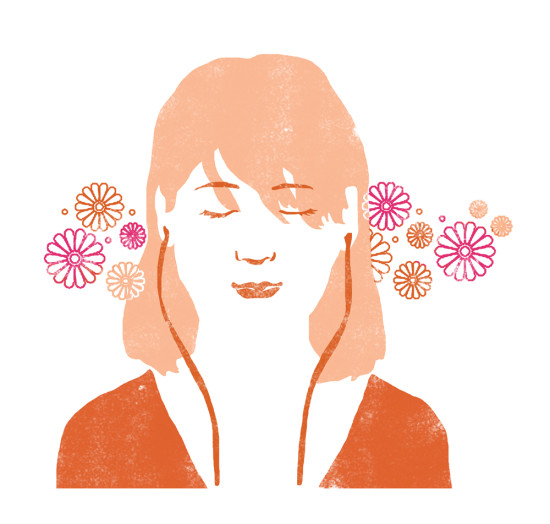
Guided meditation on audio can be great support for meditation practice. For some, it’s a long-term part of their practice life. For others, it’s something they do for awhile and then leave aside, like training wheels. As usual, there’s no rigid rule about it.
If you’re someone who really likes using audio guidance, it might be interesting to explore practicing silently for a while. The quiet that comes with silent meditation can bring a lot of relief in our noisy world. You may come to appreciate the sound of your own mind. You might also consider finding ways to meditate with others, by joining a class or a group. Practicing together with others often turns out to be a great way to get silent support from others in the room. It’s also nice to share your insights with new friends who are going through similar experiences.
5. I start to fall asleep sometimes. Fighting it drives me crazy. What should I do?
Brace yourself for the following truth-bomb: If you find yourself consistently falling asleep during meditation, you may not be getting enough sleep. Meditation is important. Sleep is also important. In fact, meditation can help you notice when you’re skimping on sleep or exercise or not eating well. Maybe it can spur you to check into whether there’s something in your life you can cut back on. (Spoiler: There’s a good chance it involves the Internet or your so-called smartphone.)
And that fighting you’re doing? Take the opportunity to bring that right into the practice. Allow the experience of resistance to be seen through the lens of mindfulness: be curious, receptive, open. What’s behind your feistiness? Why are you fighting with such vigor? Trying hard to win the prize for best meditator?
Sleepiness is a common experience for meditators, and it can happen even when you’re pretty adequately rested. It may not be merely a warning sign that you’re spending too much time on YouTube watching cat acrobatics; sometimes it is a pouty response to the very act of meditating. Let’s not mince words: Relative to the experience of reality typically demanded of us, meditating is boring. Have you ever felt sleepy when you were bored? Exactly. But on an encouraging note—when you forced yourself to pay attention to something you thought was going to be boring, did you ever find yourself getting something unexpected out of it?
So, let’s say you’re sitting in meditation and your head starts nodding and bobbing. The moment you become aware of it you can begin to work with it. What’s actually happening? What sensations are you aware of? You can also try widening your lens of attention from say breath sensation to whole body awareness. Widen even more to include sound—in the room and outside of the room. You can try standing meditation (if it won’t distract others) and opening your eyes if closed. If none of this works, stop practicing altogether and take a mini-nap. If you acknowledge the sleep and give into it for awhile, you’ll be surprised at how much rest you can get from that. Fighting it saps your energy; giving in can be replenishing. Then, you can pick up where you left off: just sitting there doing nothing!
And while getting your butt onto a cushion or a chair to meditate is a notable achievement in and of itself, it’s highly likely you’ll find even greater satisfaction if you’re sitting there when you’re already feeling alert. Right before bed may not be the right time for you to meditate, unless you’re using the practice as a way to wind down and slide into sleepiness.
6. Do I have to sit on a cushion on the floor, or can I sit in a chair (I want to do it at home and don’t want my spouse and kids looking at me like I’m doing some woo-woo weirdo thing)? What about standing or lying down?
First off, let your family know you’re trying something new, why, and what it might look like. At first, you may experience a strong temptation to dodge all prying eyes. (This is natural, because what you’re doing does look a lot weirder than it really is.)
Sit in a way that is comfortable and supportive. A chair is absolutely fine! Here are the basics… Sit upright with a straight but not stiff spine. Relaxed and at ease yet engaged and alert. Walking, standing, and lying down are also ways to practice, though lying down can be sleep-inducing. What matters most is the quality of awareness you bring to whatever practice you choose.
It helps if you can set up a spot within your home that will be yours for the duration of your daily practice. If you have children, maybe you can get them to help you set it up. If all else fails, give them money and send them to the movies.
Just like nobody ever lies awake forever, boredom, anxiety, and fear mellow and fade—not in spite of your attention, but because of it.
7. What should I do when I get really bored? Or really anxious and scared?

Our culture conditions us to be busy and distracted. We tend to look for what’s novel and exciting. Meditation—especially in the beginning—doesn’t seem novel or exciting in the least. In fact, it’s an ideal laboratory for studying boredom, because at first blush, meditating is going to seem like the most boring thing anybody’s ever tricked you into doing. You may feel like you’ve been buried alive in your own body. But go with this. Examine how boredom feels in your body, especially if it spills over into feelings of anxiety and fear. You may notice a line of sweat breaking on your forehead; a feeling of coiled, pulsating energy in your calves; or shallow breathing. Take note of these sensations—recognize and respect them—but try not to feed them. Don’t struggle to find an explanation for it all. Simply let the feelings be there.
This may be incredibly hard at first, like lying in bed and trying to will yourself to go to sleep. But in the same way that nobody ever lies awake forever, it’s equally true that boredom, anxiety, and fear will inevitably mellow and fade—not in spite of your attention to them, but because of it.
8. What should I do when I start to get a lot of pain in my legs or my neck or my feet get tingly and go to sleep?
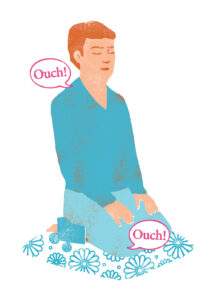
If you find yourself experiencing discomfort, squirminess, or outright pain—congratulations! You have a body!
First, evaluate. Ask: How likely is it that I will actually require medical attention as a result of these signals I’m receiving? Have my legs actually separated from my body? Are any bones visible outside the skin? Will I ever be able to play the piano again? Was I ever able to play the piano in the first place?
If the pain or discomfort is not too intense, before adjusting for comfort, see what it’s like to rest within the physical sensations you find yourself experiencing. Unpack them. They may be like a drawer overloaded with stuff, so that everything inside is tangled up and bewildering. What’s in there—tingling? Take it out and place it aside. Heat? Pulsing? Pressure? Take them out and place them aside, too.
See how these micro-sensations behave when they’re placed neatly side by side one another in your mind’s eye. Body sensations, like thoughts and emotions, have rich lives all their own, but eventually get up and move along to different things. Getting to know the shapes and textures, and even personalities, you might say, of our bodily sensations is a gift that meditation gives us. Acting upon that knowledge, we may be less inclined to grip tightly to how we wish things were, so that in the future, we can meet head on how things are—up to and including pain—with greater ease and less resistance.
If you’re experiencing a lot of pain, it’s a good idea to move to a more comfortable posture or simply make a minor adjustment. Then begin again. It’s inevitable that no matter how comfortable you may feel in a particular posture, pain or discomfort will set in at some point. If it’s not too intense, before moving for comfort, see if you can be with the physical experience, and investigate it, as I was saying above. Let yourself hang in there with it for a while and see what happens. Does it change, get worse, get better, or something else?
And if your feet get tingly and go to sleep, it’s fine to wake them up.
But once again, try being with the physical sensations for a moment or so before moving to wake them up. For most people, over time, you’ll need to do this less often.
When you meditate, you realize trying to stop thought is like trying to stop a steamroller with a feather.
9. Should I be trying to stop my thinking and clear my brain?
You’ve hit on the greatest of all urban legends related to mindfulness (and one that resists repeated debunking): that the goal is to “clear the mind,” as if meditation were the top-of-the-line Dyson vacuum for the brain. “Look,” the spiffily dressed engineer with the plumy accent would say, “there’s nothing whatsoever left in there, not like those inferior mind-cleaning devices!”
This is, though, a misconception that’s completely understandable. Meditators know that trying to stop thought is like trying to stop a steamroller with a feather. On your mind’s LinkedIn page, its expertise is listed as thinking. And yet, to buy into the idea that the mind is always thinking—even when we’re not aware of it—you have to admit that you’re not in complete, conscious control of yourself at all times. This can be a truly frightening proposition.
Yet, one of the great insights of mindfulness is recognizing that your lack of total control over the wanderings of your mind doesn’t necessarily make you weaker. Face facts: Thoughts tend to happen in a torrent without our conscious input. One study shows we are lost in rumination just shy of 50% of our waking hours! Trying to control every thought encourages you to fixate on your favorite thoughts and discard, ignore, or suppress your less enjoyable thoughts. That kind of mental wrestling match is taxing—and those thoughts we’re pushing away are busily working in the basement to come up and bug you as soon as the door is pried open—so it’s no wonder we might think a BRAIN TOTALLY CLEARED OF THOUGHTS would be desirable.
In meditation, we’re making a gentle effort to maintain focus on a particular object such as the breath as a support or anchor for the wandering mind. Each time the mind wanders—as it most assuredly will—as soon as you notice, you actively, kindly, disengage from the thought and return to the breath. No need to judge ourselves for thinking. It’s all part of practice. Each time we notice we have engaged a thought and we release it and return to the breath we strengthen the muscle of concentration and focus. In this way, you gradually steady the mind, and each time you notice the thought and let it move on, you learn a little bit more about the workings of your mind, and the relentless voice in your head is slightly more tamed.
10. I have a lot of cool thoughts. Why would I want to just let them go?
Because instructions for meditation include “letting thoughts go,” you might legitimately worry about “losing” thoughts during meditation that may otherwise have solved global warming, made recreational time travel possible, or composed the next game-changing hit single. One way to deal with this anxiety about the speeding train of genius leaving you behind is to turn toward the fear of losing that great idea. As usual, explore how it really feels instead of letting its storyline become a momentous great big deal. If it’s really important, write it down. No one will arrest you. Or, you can bend the rules altogether and write down every single thought you have during a meditation session. If you examine the list after the fact, do you imagine you’ll find that the thoughts are unlikely to ever be repeated? If they were truly important, don’t you think they might return later in the day of their own accord?
The Lightning Round
If I have an itch, can I scratch it? Yes—however, first try scratching it with your mind before using your fingers.
Should I breathe fast or slow or in between? Only worry if you’ve stopped breathing. Otherwise, you’re doing fine.
Should my eyes be open or closed? No hard and fast rules. Try both. If open, not too wide, and with a soft, slightly downward gaze, not focusing on anything in particular. If closed, not too hard, and not imagining anything in particular in your mind’s eye.
Is it possible I’m someone who just CANNOT meditate? When you find yourself asking that question, your meditation has officially begun. Everyone wonders that. Notice it. Escort your attention back to your object of focus. When you’re lost and questioning again, come back again. There’s no limit to the number of times you can do that. Meditating is not a race to perfection.
Is it better to practice in a group or by myself? Both are great! It’s enormously supportive to meditate with others. And, practicing on your own builds discipline.
What’s the best time of day to meditate? Whatever works. Consider your circumstances: children, pets, work. Experiment. But watch out. If you always choose the most convenient time, it will usually be tomorrow.
What if I get sexually (and physically) aroused by thoughts in my head? No big deal. Meditation stokes the imagination. In time, every thought and sensation will pop up (so to speak). And come back. Same old story. Release the thought, bring awareness and receptivity to body sensations, bring attention back to your chosen object. Repeat.
Do you have any tips on integrating pets into meditation practice? While meditating, we don’t have to fight off distractions like a knight slaying dragons. If your dog or cat comes into the room and barks and meows and brushes up against you or settles down on a part of your cushion, no big deal. Let it be. What works less well is to interrupt your session to relate to them. If that’s what’s going to happen, try to find a way to avoid their interrupting your practice.
This article also appeared in the December 2015 issue of Mindful magazine.
Subscribe to support Mindful.
About The Author