
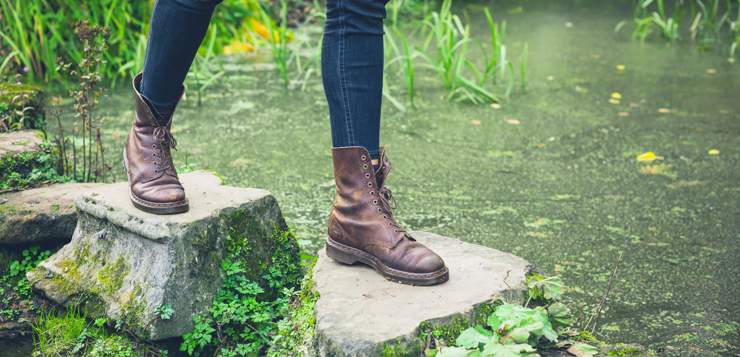
Walking is something most of us do every day, often on autopilot.
Walking meditation is an invitation to do it differently—to move through the world a little more awake, a little more present.
This simple practice turns an ordinary walk into a chance to:
- Steady your nervous system
- Gather your attention
- Feel more connected to your body and surroundings
There are many ways to practice walking meditation. The version below uses a pace that’s close to everyday walking, so you can do it in a hallway, a park, or even on your way to work—as long as you stay mindful of safety, traffic signals, and the people around you.
Before You Start: A Few Gentle Reminders
- Stay safe.
If you’re outdoors, keep an eye on lights, crossings, bikes, and cars. This is mindful walking, not eyes-closed drifting. - Keep it natural.
You don’t need to walk in slow motion or look intense. Let your pace be close to your normal walking speed. - No need to look “meditative.”
You don’t have to stare at the ground or freeze your face. You can look like a regular person out for a walk—because you are.
A Simple Walking Meditation Practice
You can try this for 3–5 minutes to start, and extend the time as it feels helpful.
1. Choose Your Path
Pick a space where you can walk comfortably:
- A corridor
- A quiet sidewalk
- A short path in a park
- Even a loop around your living room
If you’re indoors, you might walk back and forth along the same line.
If you’re outside, you can walk in a gentle loop or along a familiar route.
2. Arrive in Your Body
Before you move:
- Pause and stand still for a moment.
- Let your feet feel the ground.
- Notice the weight of your body being supported.
You might take one or two easy breaths and silently acknowledge:
“I’m here.”
3. Start Walking with Awareness
Begin to walk at a natural pace.
As you move, gently bring your attention to:
- The sensation of your feet touching the ground
- The shift of weight from one foot to the other
- The subtle movements in your legs and hips
You don’t need to analyze anything. Just feel the rhythm of walking.
4. Use Your Steps as an Anchor
To help steady your mind, you can pair your steps with simple phrases, for example:
- “Stepping… stepping…”
- Or, with each foot: “Left… right… left… right…”
If that feels too formal, simply notice:
- Heel touching
- Foot rolling
- Toes lifting
The idea is to let the body’s movement be your anchor, like the breath often is in seated meditation.
5. Notice the World Around You
After a minute or two, gently open your attention a bit wider.
Along with your steps, you might notice:
- The feeling of air on your skin
- Sounds near and far
- Colors, light, and shadow
- The presence of other people, without staring or judging
If you’re outdoors, you might silently note:
“Hearing… seeing… touching…”
Let the world come to you without needing to chase after it.
6. When Your Mind Wanders (Because It Will)
At some point, you’ll find yourself lost in thought:
- Planning your day
- Replaying a conversation
- Judging how “well” you’re doing this practice
That’s normal. It’s part of the process.
When you notice this, you can:
- Silently label it: “Thinking” or “Worrying” or “Planning.”
- Gently guide your attention back to your next step, your next footfall.
No need to scold yourself. Each time you return, you’re strengthening the “muscle” of awareness.
7. Closing the Practice
When you’re ready to end:
- Gradually slow your pace.
- Come to a comfortable standing position.
- Feel your feet on the ground again.
You might ask yourself:
- How does my body feel now?
- Is my breath any different?
- What’s the quality of my mind or mood?
Take one last easy breath, then move into whatever comes next in your day.
You’ve just turned a few ordinary steps into a mindful reset.
Bringing Walking Meditation into Everyday Life
You don’t have to wait for a special time to practice. You can weave walking meditation into moments like:
- Walking to the bus or train
- Moving between classes or meetings
- Taking a short break between tasks
- Strolling in your neighborhood
Even 30–60 seconds of aware walking can offer a small pocket of calm and clarity.
Each step is a chance to return—to your body, to your breath, to this moment just as it is.
Related articles :
About The Author