
“I’m just not a people person.”
“I’m the kind of person who always reacts this way.”
We hear (and say) these kinds of things all the time. They sound casual, but underneath there’s often a quiet belief: This is just who I am. I can’t really change.
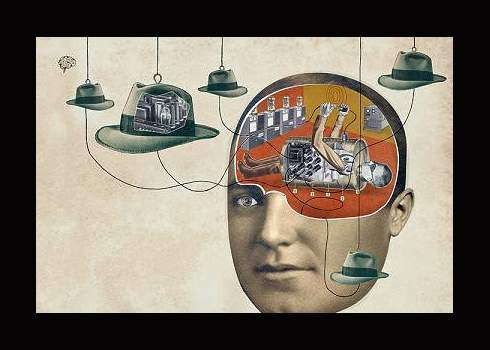
Modern neuroscience tells a very different story.
My longtime colleague, Dr. Richard Davidson—founder and chair of the Center for Investigating Healthy Minds at the Waisman Center, University of Wisconsin–Madison—has spent years studying neuroplasticity, the brain’s ability to change throughout life.
In a conversation with Mirabai Bush for the Working with Mindfulness webinar series with More Than Sound, Dr. Davidson explored how our experiences can positively shift our self-perception—and literally retrain our brains. Here’s some of what he shared.
Your “Emotional Style” Isn’t Set in Stone
When we say things like “I’m not a people person,” we’re usually talking about familiar patterns:
- How we react emotionally
- How we respond to adversity
- The moods we tend to live in
Dr. Davidson calls these differences part of our emotional style—the unique emotional patterns that give life its color.
Sometimes, though, these patterns can be uncomfortable. They can cause us suffering. And importantly, they’re not just “personality quirks”—they’re linked to specific brain circuits.
The hopeful part? Those circuits are not fixed. They can be reshaped.
What Is Neuroplasticity?
Neuroplasticity is the simple but powerful idea that:
The brain changes in response to experience.
Dr. Davidson explains that our brains are continually being shaped by:
- What we do
- How we relate to others
- The environments we’re in
- The specific kinds of training or practice we engage in
In other words, your daily actions and experiences are not neutral—they are quietly rewiring your brain over time.
The invitation is to become more intentional about this process:
We can take advantage of neuroplasticity and play a more active role in shaping our brains in ways that promote health and cultivate well-being.
Your Brain Is Changing All the Time
One of the most striking things Dr. Davidson notes is just how dynamic these changes can be.
Recent research suggests that:
- As little as two hours of playing a video game can produce measurable structural changes in the brain.
That doesn’t mean video games are the answer to everything. What it does show is how extraordinarily responsive our brains are to what we repeatedly do.
Most of the time, we’re not fully aware of this. We move through our days, and all the while our brains are being shaped—this way and that way—by:
- Our habits
- Our media and technology use
- Our conversations
- Our stress levels
- Our practices (or lack of practice) of mindfulness, kindness, and reflection
The question becomes:
If my brain is always changing, what do I want to change it toward?
Neuroplasticity Lasts a Lifetime
Another encouraging finding:
Many mechanisms of neuroplasticity persist across the entire lifespan.
One of the most important is adult neurogenesis—the growth of new brain cells.
According to Dr. Davidson, the average adult generates somewhere between:
5,000 and 10,000 new brain cells every day.
This isn’t just happening in childhood or early adulthood—it continues throughout life, right up until our last day.
Those new cells play a significant role in the brain’s capacity to adapt and rewire. That means it is never “too late” to influence how your brain develops.
Choosing Experiences That Support Well-Being
If our brains are always changing, then every day gives us opportunities—small but meaningful—to nudge them in healthier directions.
Practices and experiences that may support positive brain change include:
- Mindfulness and meditation
Training attention and awareness can reshape circuits related to emotion regulation and resilience. - Compassion and kindness
Repeatedly practicing empathy and care—toward yourself and others—can strengthen networks linked to connection and pro-social behavior. - Supportive relationships
Honest, caring interactions can soften rigid patterns of self-perception and create new emotional possibilities. - Intentional breaks from reactivity
Pausing before reacting, noticing your emotional style, and choosing a different response—even once in a while—can start to carve new pathways.
None of this requires us to become a “different person.”
Instead, it invites us to gently expand who we believe we can be.
Want to Explore Further?
You can read the rest of Dr. Davidson’s conversation with Mirabai Bush in her ebook collection Working with Mindfulness: Research and Practice of Mindful Techniques in Organizations.
To learn more about Richard Davidson’s work and neuroplasticity, you might also enjoy “Rewiring Your Emotions” from the October 2013 issue of Mindful magazine, where Mind/Body columnist Sharon Begley explores how mind training can help us chart new emotional pathways—and why we’re not destined to respond the same way to the same old triggers.
This post was originally published on Daniel Goleman’s LinkedIn blog.
Related articles :
About The Author