Working with Emotions

The Importance of Sadness

Sadness isn't necessarily something to be avoided. In fact, Susan Piver says despair can be the consequence of fighting it. Compassion is what happens when you don’t. 

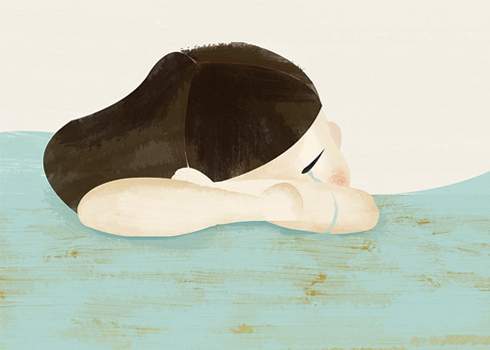
Photo © flickr.com/LIN CHIA HUI

What if I told you that the way to change the world was not to be bold, resolute, brilliant, or even compassionate? What if I told you that the way to change the world was to be sad?

It sounds so improbable. When we think of those who have taught us the most about meaningful change, we think of people who are very, very brave, say, Martin Luther King, Mahatma Gandhi, the Dalai Lama. Unwavering. Deep. Devoted to others and willing to die for what they believe, quite literally.

How do you get to be such a person?

Well, I have no idea, but I would put money on the idea that the ground, path, and fruition of their lives is sadness.

When you look out at this world, what you see will make you very, very sad. This is good. You are seeing clearly. Genuine sadness gives rise, spontaneously, naturally, completely, to the wish—no, the longing—to be of benefit to others. When your wish to help is rooted in love (i.e. sadness), it is effective. There is no question.

But because it is so uncomfortable, we immediately want to turn sadness into what we imagine will hurt less: anger, hopelessness, helplessness. When the wish to help is rooted in anger, it will only create more confusion. And of course, when we feel hopeless or helpless, we take refuge in non-action, which also creates confusion.

Meditation teaches you to relax with the discomfort of sadness and stay with it, not turn it into something else. At this point, you can lay claim to your brand of helpful activity (whether it takes the form of activism, leadership, charitable work, making art, prayer, and/or simple, basic kindness to all).

Despair is what happens when you fight sadness. Compassion is what happens when you don’t. It will not feel “good,” it will feel alive and this aliveness is the path to bliss.* So the key, and this is a big one, is to learn to stabilize your heart in the open state. The practice of meditation is this stabilization. It is so much more than a self-improvement technique, as I’ve said 100 zillion times. It is a path to peace. It is a path to love, not the sappy-silly kind, but the real deal.

You have a soft spot. Contrary to popular belief, it is not where you are weak, it is the gateway to indestructible power and that is what The Open Heart Project is all about. Please take on your meditation practice for the benefit of all. My purpose in life is to help you do this, so don’t hesitate to ask questions, report your experiences, express doubt, and offer encouragement to others.

If you open your heart, you can change the world.

Thanking you in advance, on behalf of all beings.

*I once heard from a student of Tibetan meditation master Chogyam Trungpa Rinpoche that when asked what bliss felt like, said, “To you, it would probably feel like pain.” So there’s a little clue, something to think about for this and all our other lifetimes. But I digress.


Susan Piver is the New York Times bestselling author of The Hard Questions,  the award-winning How Not to Be Afraid of Your Own Life, and The Wisdom of a Broken Heart. Learn more about her and her work at susanpiver.com.


Comments

thanks

Thanks Ms. Piver for articulating this to all of us. I am currently living in a place where there is no getting away from the sadness of the world. On the way to the beach, we pass through an area where starving dogs are trying to eek out an existence on the town dump site. Just a few days ago, when passing through this area, one of the dogs lay in the middle of the road, bloated and very dead. Onward, we went to our destination to enjoy the view, to eat food, to relax. Sad joy. It's inescapable for me. Sometimes I do let it bring me down. I think what happens is that when I see such a thing as the dog, I want to stop and really feel the pain of it. Tears well up in my eyes. I see my husband with his more pragmatic view of the world. "Oh well, that's too bad, " he seems to be saying with his forward motion. Living here is like that for a lot of people. They may feel sadness in their hearts, I do not know, but I know that for them, they live around death and suffering every day. They smell it, taste it and can reach out and touch it, it's that close. At least for me, I can come home to my little house on this mine site and curl up with a good book and try, just try, to pretend that there is a place in the world that is free from this kind of suffering and pain. I think that place is called home. But perhaps I have finally come home, because now I sit with the sadness of the world. I give it a little home for it to reside in my heart so that I don't forget what's real and true. I hold that beach in the same place, with its incredible beauty.

Thank you

Thank you so much, Susan, for sharing this. These are just the words I needed to hear today and I am grateful that they were available for me to find. Though I mostly feel like a happy person, full of light, I have also struggled with a profound sadness within. I saw this sadness to be a bridge to empathy and compassion. However, I constantly tell myself that I am supposed to transform this sadness into something more productive. I've also wondered why other people don't seem to carry (or maybe acknowledge) their own sadness. I have often felt weak, but now I see that I don't have to struggle with this anymore. Thank you for helping me finding this new perspective. Much warmth to you. :)

You are welcome

missmasala, I'm so glad that these words resonated with you. I appreciate you taking the time to say so and am glad our paths have crossed. Warmth to you! Susan