“No time.”
Again and again, teachers share this as the main reason they can’t add social-emotional skills to their classrooms. With everything you’re already responsible for, a separate 30-minute SEL (social-emotional learning) block can feel impossible.
But there’s some hopeful news:
You don’t always need more time—you can often use the time you already have.
A growing body of work shows that when educators weave SEL into existing lessons, students can practice social, emotional, and moral skills while they learn core content.
SEL Is Already Hiding in Your Curriculum
In one study, student teachers were paired with novice school psychologists to co-create language arts lessons with an SEL focus. The result?
- “Creative and powerful” lessons
- Increased motivation to keep collaborating around SEL
Inspired by this, the GGSC Summer Institute for Educators tried a similar approach. We invited participants to bring their own lesson ideas and look at them through a social, emotional, and moral lens.
The result surprised us: so much of the existing curriculum already contained natural openings for SEL—as long as teachers paused to notice and name them.
Many topics, books, and concepts already touch on:
- A person’s emotional life
- An ethical dilemma
- A situation calling for compassion
- A societal challenge
- The ethical use of knowledge
- Cross-group interactions
- Implicit prosocial concepts (like ecosystems or the Declaration of Independence)
For example, one elementary math educator pointed out that fractions often show up as communities dividing resources (like pizza). That simple slice problem can become an SEL prompt:
“How could we divide the pizza based on who is hungriest?”
That’s an easy doorway into talking about fairness and equity, not just numerators and denominators.
Questions to Help You Integrate SEL into Any Lesson
You don’t have to redesign your entire curriculum. Instead, you can take an SEL “inventory” of what you’re already teaching.
When you plan a lesson, try asking yourself:
- Does the content naturally raise emotional or ethical issues?
- Is there a character facing a hard choice?
- Is there a person or group dealing with injustice or challenge?
- Will this lesson create social dynamics to navigate?
- Are students working with partners or in groups?
- Will they need to collaborate, negotiate, or resolve conflict?
- Is the task emotionally or cognitively demanding?
- Might students need to manage frustration or disappointment?
- Will they need perseverance, attention, or self-confidence?
- Does the assignment invite big-picture questions?
- Are there opportunities to explore fairness, responsibility, impact, or empathy?
When you notice these openings, you can:
- Add a brief mindful moment before or after the activity
- Invite a short reflection or discussion about feelings, choices, or perspectives
- Name the skills students are practicing (e.g., active listening, reframing, perspective-taking)
By doing this, you’re not just teaching content. You’re helping students see that social and emotional skills are woven into everyday life, not something separate that happens only during a special lesson.
Three Sample Lessons, Transformed with SEL
At the Summer Institute, once teachers had a foundation in the science and practice of social, emotional, and moral development, we gave them a challenge:
Design a lesson that integrates
– a social or emotional skill,
– a mindfulness practice, and/or
– a moral dilemma
into content you already teach.
Here are a few of the lessons they created.
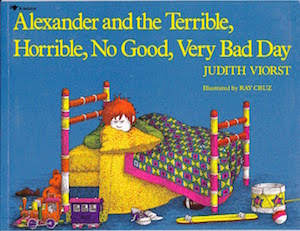
Elementary School: Reframing “Bad Days”
Skill focus: Cognitive reappraisal (changing how we view a situation)
Lesson flow:
- Mindful moment
Begin with a short, age-appropriate mindfulness practice—perhaps a few calm breaths or a quiet moment of noticing how their bodies feel. This helps students settle and reflect. - Read aloud and feel-listing
Read the book to the class. Then, as a group, list the problems Alexander faces. For each problem, students name how Alexander might be feeling (e.g., sad, jealous, frustrated, embarrassed). - Reframing together
Choose a few incidents from the list and explore how Alexander might respond differently so he feels better. For example:- Remembering a time when his teacher liked his picture
- Feeling happy that his friend’s work was appreciated
- Drawing a castle that’s visible next time
- Personal reflection and class book
To close, students create pages for a class book called Pretty Good Day. Each page shows:- Something challenging that happened to them
- How they changed the way they thought about it
- How that new perspective made it feel less painful
What students practice:
- Naming feelings
- Noticing thoughts
- Reframing experiences
- Recognizing that a “bad day” can hold different stories
Middle School: Humpty Dumpty and Group Roles
Skill focus: Social awareness, collaboration, problem-solving, and norms
Subject: Science (lab setup and roles)
Materials:
Straws, plastic wrap, cotton balls, aluminum foil, paper, and an egg (Humpty Dumpty)
Lesson flow:
- Individual challenge (1 minute)
Students get one minute to design a “wall with protection” so Humpty Dumpty won’t fall and break. They work alone and try their best with limited time. - Debrief and self-reflection
After the attempt, students discuss:- What was hard about this?
- How did it feel to work alone?
- What strategies did you use?
- Small-group challenge (3 minutes)
Students form groups of two or more and repeat the challenge with more time. This round encourages:- Shared problem-solving
- Noticing individual and group strengths
- SEL discussion
The teacher guides a conversation around:- Cooperation and conflict
- How current choices affect future outcomes
- How roles and communication impact success
- Roles and norms
Students attempt the challenge a final time, now with specific roles:- Project director
- Materials manager
- Data recorder
- Timekeeper
- Optional extension: Moral questions
Since middle schoolers are beginning to question rules and norms, the class can explore deeper questions:- Why did Humpty Dumpty climb the wall? Was he allowed?
- Where were his friends or caregivers?
- Who is responsible for making sure the wall is safe?
- Did he receive adequate care after he fell?
- What could a community do to better prevent and respond to situations like his?
What students practice:
- Collaboration and communication
- Perspective-taking
- Responsibility and safety
- Questioning fairness and rules in a thoughtful way
High School: Health Care and Ethics
Skill focus: Perspective-taking, ethical reasoning, active listening
Subjects: Math + History + Civics/Health
Lesson flow:
- Math investigation
In math class, students use ratios and graphing to analyze:- Federal spending on health care per capita
- Comparisons across time or groups (as appropriate)
- Historical context
In history, students explore the development of health care in the U.S. across the 18th, 19th, 20th, and 21st centuries. They look at:- Key policies
- Social and economic shifts
- Who had access—and who did not
- Ethical inquiry
Drawing on what they’ve learned, students explore big questions:- Is health care a moral imperative or primarily a social convention?
- Does the government have a moral obligation to provide health care to all citizens because lack of care causes harm?
- Or does it provide health care mainly because the law requires it?
- Mindful moment and SEL norms
Because these conversations can surface strong, divergent views, teachers integrate:- A brief mindful pause at the start or midpoint
- Clear SEL skills and norms, such as:
- Active listening
- Speaking from one’s own experience
- Non-judgment
- Perspective-taking and respectful disagreement
What students practice:
- Analyzing data and history
- Grappling with real-world moral questions
- Holding multiple perspectives
- Engaging in civil discourse around complex issues
Making SEL a Habit of Mind
Looking at curriculum through a social, emotional, and moral lens is like building a new habit:
- The more you do it, the more natural it feels.
- Over time, you begin to see potential SEL moments everywhere—not as extra tasks, but as dimensions of what you’re already teaching.
Perhaps the most powerful outcome is what this does for students. As they experience lessons like these, they begin to:
- Examine their education, not just absorb it
- Reflect on their decisions, not just make them
- Notice their interests and relationships through a more thoughtful lens
In this way, integrating SEL into content doesn’t just help students do well in school. It helps them cultivate a more discerning, compassionate, and grounded approach to life.
This article originally appeared on Greater Good, the online magazine of UC Berkeley’s Greater Good Science Center, one of Mindful’s partners.
About The Author